Cloudy Pool Water: Causes and How to Clear It
Cloudy water is a diagnosis, not a product aisle. Most milky pools are filtration, low chlorine, or a pH/alkalinity mess — and clarifier only helps after those are fixed.
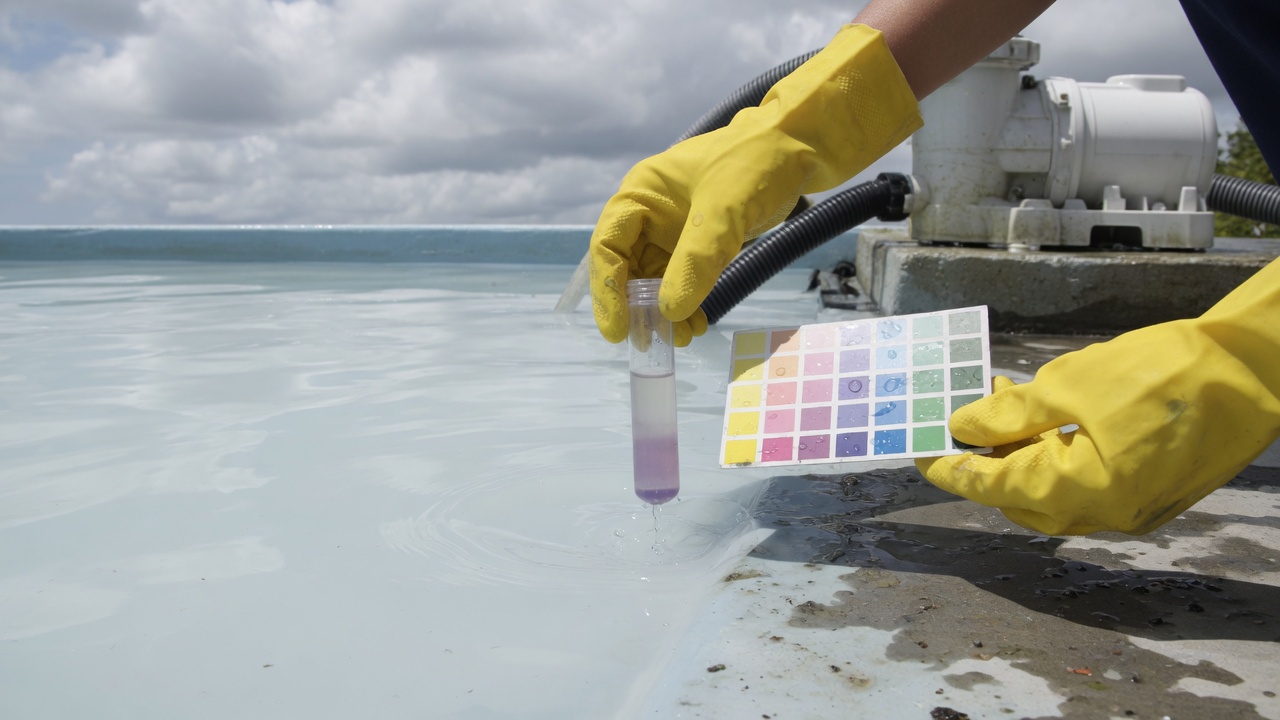
TL;DR — check these in order
- Filter and circulation. A dirty cartridge or a pump that only runs four hours a day will keep the pool milky no matter what you pour in.
- Free chlorine vs CYA. If FC is under the CYA-adjusted minimum, the cloud is often early algae.
- pH and alkalinity. High pH makes chlorine lazy and can throw calcium out of solution. See pool pH too high.
- Only then consider a clarifier or floc — after the water is actually sanitized.
What kind of cloudy is it?
| Looks like | Likely cause | First move |
|---|---|---|
| Milky / hazy, still blue | Filter, high pH, or high CH | Clean filter. Test pH, TA, CH. |
| Dull green-gray | Low FC / early algae | Raise FC to the CYA target and brush. |
| Pea-soup green | Algae bloom | Start a green-pool recovery, do not just floc. |
| Cloudy right after shocking | Dead organics + dirty filter | Keep filtering. Brush. Backwash. |
| Cloudy after a storm | Phosphates, dirt, diluted chlorine | Test FC/CYA. Vacuum. Recirculate. |
1. Filtration first
Chemistry cannot polish water your filter is not turning over. Before you buy another bottle:
- Run the pump long enough for at least one full turnover (often 8–12 hours).
- Rinse or replace cartridges. Backwash sand if the pressure is 8–10 psi above clean.
- Make sure return jets are angled down and the skimmer is not starved for water.
- Vacuum to waste if the floor is a dusting of dead algae or silt.
2. Free chlorine is either high enough or it is not
A strip that says “OK” at 2 ppm is meaningless if CYA is 70. Use the chart, not the happy-face color block. If FC is below the minimum, dose liquid chlorine and retest after circulation. If the pool is already green, skip DIY guesswork and use the green pool recovery tool.
Combined chlorine above 0.5 ppm also makes water dull. The fix is a proper shock / SLAM, not more tabs.
3. pH, alkalinity, and calcium
High pH (above ~7.8) plus high calcium is how you get a milky, almost chalky pool — calcium carbonate falling out of solution. Lower pH first, then alkalinity, then decide if you have a calcium problem. Dumping more calcium hardness increaser into cloudy water is how plaster pools get scale.
Quick targets
- pH 7.2–7.6
- Total alkalinity 80–120 ppm
- Calcium hardness: roughly 250–400 on plaster, lower is fine on vinyl/fiberglass
When clarifier is worth it
Clarifier clumps fine particles so the filter can catch them. It helps after FC is in range and the filter is clean. It does nothing useful in a green pool and can gum up a dirty cartridge.
Floc drops everything to the floor for vacuum-to-waste. Use it when you need the pool presentable tomorrow and you are willing to lose water. It is not a substitute for sanitation.
What to test right now
If you already have numbers, run them through the free pool health check. You will get a score and a next step without creating an account. If you want that step saved — dose, reminder, retest — start a PoolTrack plan so the next reading is compared to this one.
Keep reading
- TreatmentHow to Shock a Pool (and How Much Shock You Actually Need)Skip the mystery bag of shock. Use your CYA to set the real target, dose liquid chlorine, and retest until free chlorine holds overnight.
- DosingHow Much Liquid Chlorine to Add to Your Pool (With Dosing Charts)A plain-English dosing guide with tables for 10k, 15k, 20k and 30k gallon pools — plus when to add, how to shock, and how to avoid wasting chemicals.
- TroubleshootingPool pH Too High: How to Lower It Safely (Step-by-Step)Why pH climbs, how much muriatic acid you actually need, and the aeration trick that lowers total alkalinity without tanking your pH.
- ComparisonPoolTrack vs Pool Math: An Honest ComparisonPool Math is the default for TFP users. Here's where it still wins, where it feels dated, and why thousands of pool owners are moving to PoolTrack.